Sober Sis Blog
Written By Jenn Kautsch
Why Thinking About Drinking Is Exhausting You
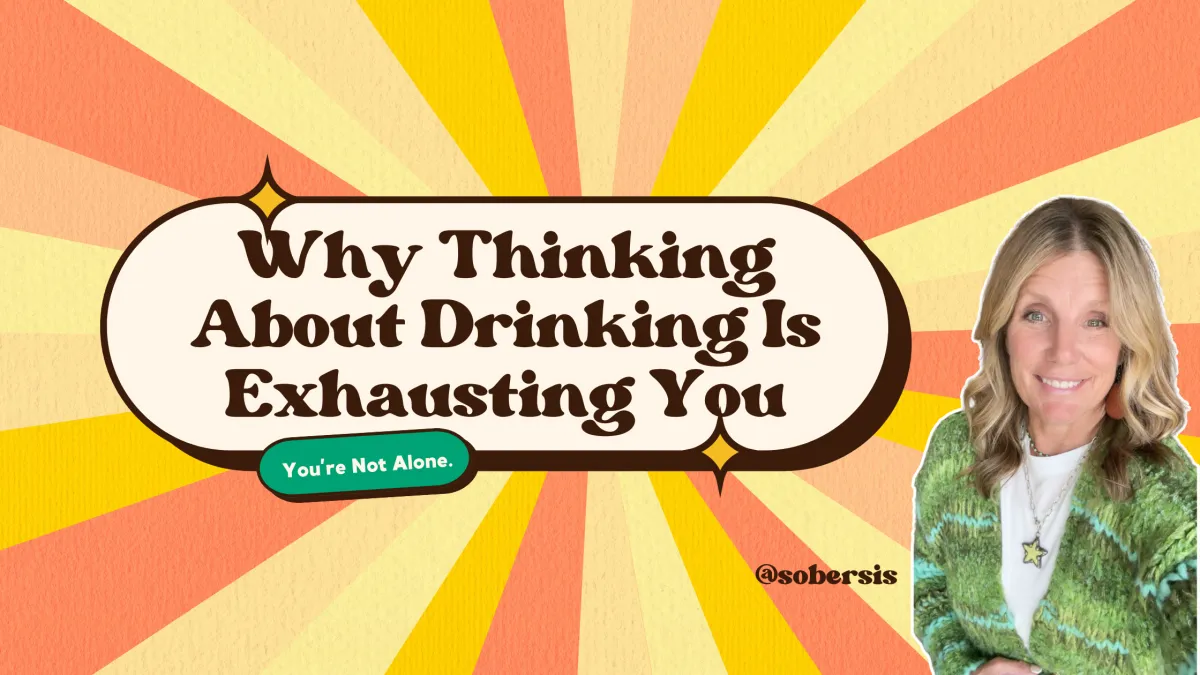
The Mental Load No One Talks About
If you’ve ever spent your day thinking:
“I’m not drinking tonight…”
Only to end up drinking anyway…
You are not alone.
And more importantly, you are not broken.
For many women, the most exhausting part of drinking isn’t actually the drinking itself.
It’s the thinking.
The mental tug-of-war.
The negotiations.
The constant back-and-forth in your head.
Should I?
Shouldn’t I?
Maybe just one.
Maybe not tonight.
Maybe only weekends.
Maybe after a stressful day.
It’s exhausting.
And if this sounds familiar, this post is for you.
🎥 Watch the Full Workshop below
The Drinking Loop Starts Earlier Than You Think
Most women think the struggle starts at wine o’clock.
But it often starts much earlier.
Maybe you wake up determined not to drink tonight.
You feel motivated. Clear. Focused.
You drink your green juice.
You get your workout in.
You have every intention of sticking to your plan.
But somewhere around the afternoon…
The negotiation begins.
For many women, that shift happens around 3 PM.
Decision fatigue sets in.
Stress builds.
Energy drops.
And suddenly your brain starts searching for relief.
That’s when the mental loop gets loud.
Alcohol Becomes the “Solution”
Here’s the hard truth:
For many women, alcohol becomes a coping tool.
Not because they’re weak.
But because it works temporarily.
Stress?
Drink.
Lonely?
Drink.
Celebrating?
Drink.
Bored?
Drink.
Overwhelmed?
Drink.
Alcohol starts becoming the answer to everything.
And over time, your brain begins to associate relief with drinking.
That’s why the urge can feel automatic.
Why Thinking About Drinking Feels So Draining
This is where many women get stuck.
You want two different things at the same time.
You want to drink less.
But you also want the relief alcohol promises.
That internal conflict is called cognitive dissonance.
And it takes an incredible amount of mental energy.
You’re constantly:
• deciding
• negotiating
• justifying
• resisting
• thinking about drinking
• thinking about not drinking
No wonder you feel exhausted.
Your Brain Is Trying to Automate the Pattern
Your brain loves efficiency.
It’s constantly trying to automate your habits so you use less mental energy.
That’s why routines become automatic.
You brush your teeth without thinking.
Drive familiar routes on autopilot.
Repeat habits without much awareness.
Drinking works the same way.
If your brain learns:
“5 PM = wine”
It starts preparing for it automatically.
Not because you’re broken.
Because your brain is doing exactly what brains do.
Why Your Brain Keeps Bringing Alcohol Up
Your brain remembers relief more than regret.
That part is important.
When alcohol gives you:
• temporary relaxation
• a dopamine hit
• relief from stress
• emotional escape
Your brain bookmarks it.
It says:
“That helped. Let’s do that again.”
What it doesn’t immediately remember:
• the anxiety later
• disrupted sleep
• regret
• brain fog
• emotional depletion
So the cycle repeats.
The Bottle Breakdown
Jenn calls this “the bottle breakdown.”
It starts innocently enough.
A glass while cooking.
Another while eating.
One more while cleaning the kitchen.
Before you know it…
The bottle is almost gone.
And now you’re mentally trying to justify finishing it.
Not because you planned to.
But because the pattern took over.
And the exhausting part?
Not just the drinking.
The thinking around it.
You Don’t Need to Fight the Craving
This might surprise you.
The goal isn’t to suppress every craving.
It’s not to shame yourself for thinking about alcohol.
It’s to acknowledge it.
Name it.
Get honest about it.
You can say:
“I want the relief.”
“I also hate how this makes me feel.”
“I want it and I don’t want it.”
That honesty reduces shame.
And shame is what often keeps the loop going.
How to Quiet the Noise
So what actually helps?
1. Reduce Decision Fatigue
The more decisions your brain makes all day, the harder evenings become.
Simplify what you can:
• plan meals ahead
• prep your evenings
• reduce unnecessary decisions
• create supportive routines
Your brain needs less chaos, not more.
2. Remove the Nightly Negotiation
One of the most exhausting things is repeatedly debating yourself.
That’s why pre-deciding matters.
• Pre-decide
• Pre-plan
• Play the movie forward
Instead of deciding in the moment, decide beforehand.
That keeps you in the driver’s seat.
3. Stop Isolating
Many women carry this entire struggle silently.
Inside their own heads.
That isolation intensifies the mental load.
Talking about it changes everything.
Connection reduces shame.
Support reduces overwhelm.
Community interrupts the loop.
You’re Not Broken
Read this carefully:
You are not broken.
Your brain is responding to a highly rewarding substance exactly the way brains are wired to respond.
The problem isn’t you.
The problem is the exhausting cycle your brain has learned.
And cycles can change.
Start Here Tonight
Tonight, instead of fighting your thoughts…
Pause.
Notice them.
Name them.
Ask yourself:
“What am I actually looking for right now?”
Relief?
Rest?
Connection?
Comfort?
Then ask:
“Will alcohol truly give me that… or just temporarily distract me from it?”
That one pause can change everything.
💛 Ready for Your Next Step?
If you’re tired of the back-and-forth…
and ready to feel consistent, clear, and in control again…
👉 Download the Free Happy Hour Survival Guide
Simple tools to help you through wine o’clock without relying on willpower
And if you’re ready to go deeper…
👉 Join the 21 Day Reset Challenge
Step off autopilot, understand your patterns, and quiet the mental loop around alcohol



Written By Jenn Kautsch
Your sober minded sis!
TIRED of the DETOX to RETOX loop?
Break free with the 21 Day Reset Challenge.
Sign up now to get BONUS coaching before we start!
Need support TONIGHT at WINE O’CLOCK?

Get my FREE “Survive the 5” guide by CLICKING HERE.
Sober Sis Swag!



COMPANY
LEGAL
FIND US ON SOCIALS


