Sober Sis Blog
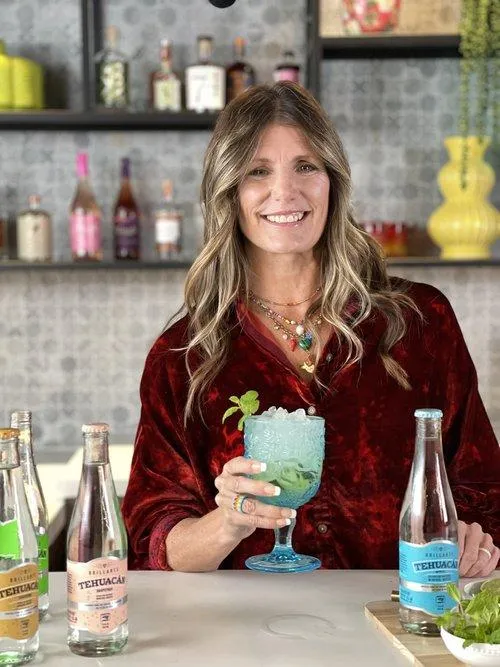
Written By Jenn Kautsch
Stop Starting Over
What if the answer isn’t another Day One, but simply picking up where you left off?
I have had more Day Ones than I can count. Truly. If there were punch cards for Day Ones, I would have earned a free toaster, a set of steak knives and probably a weekend getaway by now. For years, I was very good at waking up and declaring, “That’s it. I’m done.” Sometimes this declaration came on the heels of a hangover, which, as you can imagine, made me VERY convincing. Other times nothing particularly dramatic had happened. I was simply tired. Tired of thinking about drinking, tired of negotiating with myself about drinking, tired of wondering whether tonight would be a wine night, how much I would have, whether I had been “good” lately, and whether tomorrow would finally be the day I got my act together. So I would decide: Today is Day One.
And sometimes Day One became Day Two. Maybe Day Seven. There were even seasons when I went much longer. But eventually something would happen. “Life would get lifey” as my sister SHIFT with Gina says. I’d get stressed or tired. We’d go on vacation. There would be something to celebrate. Or maybe I’d been doing so well that I would decide I had clearly proven I could control alcohol, so naturally the appropriate way to celebrate my ability to control alcohol was to drink alcohol. You see the problem. And the minute I drank again, my brain would announce, “Well, you blew it.” If I blew it, then obviously I needed to start over. Preferably on Monday, because why start over on a Thursday when Monday is sitting right there looking all fresh and promising?
For the longest time, I thought the problem was the drink. Eventually, I realized there was another problem hiding right behind it: what I told myself after the drink. That thinking could turn one decision into a weekend, a week or sometimes much longer. The slip wasn’t always what took me down. It was the story I told myself after the slip.
The Trouble With Starting Over
I think a lot of us have what I call the Monday mentality. Monday we’ll start the diet. Monday we’ll get organized. Monday we’ll exercise. Monday we’ll stop drinking. Monday Jenn is extremely impressive, by the way. She has meal-prepped, worked out, cleaned out a closet, answered every email and developed a completely new personality by approximately 9:15 AM. The trouble is Tuesday Jenn eventually shows up, and she’s tired.
There is something wonderfully satisfying about a clean slate. A fresh calendar. A new notebook. A brand-new plan. DAY ONE. I understand the appeal because I lived in that cycle for years. But there is a sneaky little problem with constantly starting over. When we tell ourselves we have to return to the beginning every time something doesn’t go according to plan, we start believing that everything we accomplished before that moment has somehow disappeared. We act as though all the good days have been deleted. But they haven’t.
You are not actually back at the beginning because you know things now that you didn’t know then. You’ve practiced. You’ve experienced alcohol-free mornings. Maybe you’ve navigated a dinner without drinking or taken your first alcohol-free vacation. Maybe you discovered you sleep better or your anxiety quiets down when alcohol isn’t constantly stirring things up. Maybe you’ve made it through a Friday night, a stressful workday or a celebration and discovered, “Oh my goodness, I actually CAN do this.”
Those experiences don’t vanish because you had a drink. They happened. They belong to you. They are part of your story now.
Picture yourself walking along on a snowy mountain. You’re doing fine and suddenly, WHOOP, your foot goes out from under you. You slip. There’s a moment right there when you can regain your footing, stand back up and continue walking. Or you can start sliding down the mountain, gathering speed as you go. That’s exactly what I used to do with drinking. A slip became a slide because I thought I had already ruined everything.
If I drank on Monday after telling myself I wasn’t going to drink, I might think, “Well, this week is shot. I’ll start again next Monday.” Which is fascinating logic when you really think about it. I made one decision I didn’t feel good about, so apparently the solution was to make six more days of the same decision. But that’s what all-or-nothing thinking does. Once the wheels are off, we decide we might as well drive the car into the ditch. Then shame gets involved, and shame rarely helps us course-correct. It tends to knock us down and then convince us to stay there.
What changed for me was learning that I could interrupt the slide. I could get my footing back without going all the way down the mountain. I could stop asking, “What is wrong with me?” and start asking, “What happened here?” Those are two very different questions. One creates shame. The other creates curiosity. Curiosity lets me look backward just long enough to learn something that can help me move forward.
Maybe I was hungry. Maybe I was tired. Maybe I had gotten complacent or walked into a situation without a plan. Perhaps I had disconnected from the people and practices that were helping me. I might had started romanticizing alcohol again and remembering only the first twenty minutes instead of playing the whole movie forward. Whatever it was, there was information there. And if I was willing to look at it without beating myself up, that information could actually help me.
That’s why we call these moments data points around Sober Sis.
When a Slip Becomes a Slide
Picture yourself walking along on a snowy mountain. You’re doing fine and suddenly, WHOOP, your foot goes out from under you. You slip. There’s a moment right there when you can regain your footing, stand back up and continue walking. Or you can start sliding down the mountain, gathering speed as you go. That’s exactly what I used to do with drinking. A slip became a slide because I thought I had already ruined everything.
If I drank on Monday after telling myself I wasn’t going to drink, I might think, “Well, this week is shot. I’ll start again next Monday.” Which is fascinating logic when you really think about it. I made one decision I didn’t feel good about, so apparently the solution was to make six more days of the same decision. But that’s what all-or-nothing thinking does. Once the wheels are off, we decide we might as well drive the car into the ditch. Then shame gets involved, and shame rarely helps us course-correct. It tends to knock us down and then convince us to stay there.
What changed for me was learning that I could interrupt the slide. I could get my footing back without going all the way down the mountain. I could stop asking, “What is wrong with me?” and start asking, “What happened here?” Those are two very different questions. One creates shame. The other creates curiosity. Curiosity lets me look backward just long enough to learn something that can help me move forward.
Maybe I was hungry. Maybe I was tired. Maybe I had gotten complacent or walked into a situation without a plan. Perhaps I had disconnected from the people and practices that were helping me. I might had started romanticizing alcohol again and remembering only the first twenty minutes instead of playing the whole movie forward. Whatever it was, there was information there. And if I was willing to look at it without beating myself up, that information could actually help me.
That’s why we call these moments data points around Sober Sis.
Not because we’re trying to make light of something that matters, but because I don’t want us wasting valuable information on shame. If something happened, let’s learn from it.
Direction Matters More Than Speed
I’ve said this around Sober Sis for years, and I will probably say it until everyone is tired of hearing me say it: Direction matters more than speed.
My own journey was anything but a straight line. Before my last drink in April 2017, I spent about five years trying to figure this thing out. Five years of rules, moderation experiments, willpower, promises to myself and more Day Ones than I could ever count. At the time, I thought those years were evidence that I couldn’t do it. Looking back, I see them very differently. I was gathering data. I was doing reconnaissance. I was slowly discovering what worked, what didn’t work and what I actually needed.
I thought I needed more discipline because discipline had worked for me in so many other areas of my life. Surely if I just tried harder, made better rules and exercised more self-control, I could get this drinking thing under control too. But I was already trying hard. What I needed wasn’t more white-knuckled effort. I needed practical tools. I needed community. I needed to understand why I wanted the drink in the first place. And for me personally, I needed a whole lot more willingness and surrender.
None of those five years were wasted. Even the decisions I wish I had made differently taught me something. By the time I got to my last drink, all of that reconnaissance was coming with me. I wasn’t starting from scratch. I had learned things about myself, about alcohol, about what I wanted and about the kind of life I didn’t want to keep living.
I think this is one reason I feel so strongly about telling women that one drink does not erase all their growth. One weekend doesn’t erase everything you learned. One hard day doesn’t erase a month or a year of progress. If you had one good alcohol-free day, you had one good day. If you had 27 good days, you had 27 good days. If you had one good year, you had one good year. Those experiences are yours.
Nothing can go backward and take them away from you.
Mile 17 Still Counts
I often picture this journey like running a marathon. And let me be clear, I am not actually a marathon runner, so no one needs to send me questions about split times or carb loading. But the analogy works.
Imagine you are running a 26-mile marathon and you make it to mile 17. You’ve been running and running, and suddenly you trip over a rock or your shoe comes untied. Down you go. You skin your knee. You’re frustrated and probably a little embarrassed. What would you do next? Would you stand up, turn around and run SEVENTEEN MILES BACK to the starting line because you fell?
Of course not. Nobody would do that. You’d get up at mile 17. You might tend to your knee. You’d figure out what happened. You’d double-knot your shoelace if that was the problem. And then you would keep moving in the direction of the finish line. You would never dream of saying the first 17 miles didn’t count simply because you stumbled.
So why do we do that to ourselves in this journey?
If you have been pursuing a more sober-minded life for one day, one month or one year, those miles still count. You don’t erase them because you fell. You use the fall as feedback. Maybe it tells you that you need more support. Maybe it tells you that you’ve gotten disconnected. Maybe it shows you a trigger you hadn’t noticed before. Maybe you need to tie your proverbial shoes a little tighter next time. But whatever you learn, you learn it at mile 17. You don’t have to run backward to learn it.
That’s what I mean when I say: Forgive the mistake. Remember the lesson.
We don’t pretend it didn’t happen. We don’t excuse a pattern that’s taking us somewhere we don’t want to go. But we also don’t strap the mistake to our backs and carry it around like a 40-pound bag of shame. We forgive ourselves, we remember what the experience taught us, and we keep moving.
Sometimes the Answer Is Cheese and Crackers
This is where curiosity becomes so important because when we stop judging ourselves long enough to get curious, we can start reverse-engineering what happened.
Maybe you planned not to drink and then 5:30 rolled around and suddenly you found yourself pouring wine. Instead of waking up the next morning and announcing that you have no willpower and clearly need yet another Day One, what if you backed the movie up a little?
What happened at 3:00?
What happened at 4:00?
Were you stressed? Lonely? Angry? Overwhelmed? Did you skip lunch? Did you walk through the door absolutely starving and head straight into wine o’clock without even realizing it?
Sometimes we’ve assigned alcohol a job when what we actually needed was a snack.
I’m serious.
There have probably been moments when what felt like an overwhelming need for wine was actually a very basic human need that hadn’t been met. Sometimes the answer is rest. Sometimes it’s connection. It could be as simple as getting outside or calling a friend or setting a boundary. And yes, sometimes the answer really is cheese and crackers.
Curiosity gives us the opportunity to discover that. Shame doesn’t.
I Got to Practice This at a Dinner Party
Not long ago, my husband and I went to a dinner party celebrating dear friends and their business. It was lovely, and I was genuinely happy to be there. I was also running on fumes. It had been a very full week, I was talked out, and sometimes getting dressed up and walking into a room where you don’t know everyone requires a little extra something from you.
And then there was the wine. Lots of wine. Wine glasses were sitting in front of everyone, including me, and the wine was being poured right down the table. My husband drinks and I don’t. We’ve navigated that reality for years, and I’ve learned to stay in my lane while he stays in his. But as I sat there tired and surrounded by wine, I could remember exactly what drinking Jenn would have done.
She would have had the wine.
Not because something terrible had happened. Not because she was falling apart. She would have had it because she was tired. Because it might give her a little lift. Because socializing might feel easier. Because for about twenty minutes, it probably would have felt pretty good.
And I think we need to be honest about those moments. I love my alcohol-free life, but that doesn’t mean every alcohol-free choice comes with angels singing in the background while I joyfully clutch my sparkling water. Sometimes not drinking is uncomfortable. That night, I was uncomfortable. And I was okay.
I had pre-decided. I had planned ahead. My friend had even thoughtfully provided an alcohol-free option. And most importantly, I played the movie forward. I knew what I actually wanted at the end of that evening. I wanted to go home, take off my fancy dress and crawl into bed. It was 94 degrees in Fort Worth at 10:00 PM, so even my beloved hot bath was out of the question. I just wanted BED.
And I knew wine wasn’t going to give me anything I truly wanted. It might have given me twenty minutes, but those twenty minutes come with a bill. Drinking Jenn took a long time to understand that.
Maybe This Is Really About Resilience
One of the greatest things this journey has taught me is that I can be uncomfortable without immediately trying to change how I feel. I can be tired. I can feel awkward. I can be the only person at the table not drinking. I can have a craving. I can want something and still decide not to have it. I can feel a feeling without needing to alter reality to make the feeling disappear.
Every time I practice that, I build resilience and I think resilience is a much better goal than perfection. Perfection says, “I shouldn’t struggle with this anymore.” Resilience says, “I know what to do when I struggle.” Perfection says, “If I fall, I failed.” Resilience says, “If I fall, I know how to get back up.” Which brings me to the question I really want you to consider.
What if you stopped starting over and started continuing?
What if, instead of constantly returning yourself to Day One, you learned to pick up where you left off? Not pretending the hard day didn’t happen. Not excusing choices that are taking you away from the life you want. But also not throwing away everything good that came before them.
You could simply say, “Okay. That happened. What can I learn? What support do I need? What would I do differently next time?” And then continue.
Just Keep Adding Beads
During the workshop where I was teaching about this, one of our Quest Sisters shared an image that I haven’t been able to stop thinking about. She said she pictures her journey like a necklace. Each day is another bead she adds to the chain. Some beads are a different color because they represent days when she struggled, but she just keeps adding beads. I absolutely love that.
She doesn’t rip the necklace apart because one bead looks different. She doesn’t scatter all the previous beads across the floor and announce that the necklace never existed. That different bead simply becomes part of the story. Isn’t that a much more honest picture of life anyway?
Some days are shiny. Some days are wonky. Some days you feel like you could write the book on sober-minded living, and other days you need someone to remind you to eat lunch. Some days you’re on the mountaintop and some days you’re wandering around in the valley wondering how on earth you got there.
But you keep adding beads.
You keep learning.
You keep connecting.
You keep moving forward.
And eventually, when you look back, you realize you have created something beautiful not because every bead was perfect, but because you kept going.
You’re Not Back at Square One
So if you’ve been telling yourself lately that you need to start over, maybe you don’t. Maybe you just need to begin again. Right here. With everything you know now. With every alcohol-free day behind you, every lesson you’ve learned, every hard thing you’ve navigated and every little piece of evidence that tells you change is possible.
You are not standing at the starting line anymore, Sis.
You’ve already run some miles.
So tend to the scraped knee if you need to. Tie your shoes. Ask yourself what the fall taught you. Reach out for support instead of isolating. Then stand back up and face forward.
Forgive the mistake. Remember the lesson and keep going. Because direction matters more than speed. And maybe progress over perfection isn’t about getting it right every single time. Maybe it’s simply learning how to keep adding beads to the necklace.
Keep going and growing, Sis.
Jenn


Written By Jenn Kautsch
Your sober minded sis!
TIRED of the DETOX to RETOX loop?
Break free with the 21 Day Reset Challenge.
Sign up now to get BONUS coaching before we start!
Need support TONIGHT at WINE O’CLOCK?

Get my FREE “Survive the 5” guide by CLICKING HERE.
Sober Sis Swag!



COMPANY
LEGAL
FIND US ON SOCIALS


