Sober Sis Blog
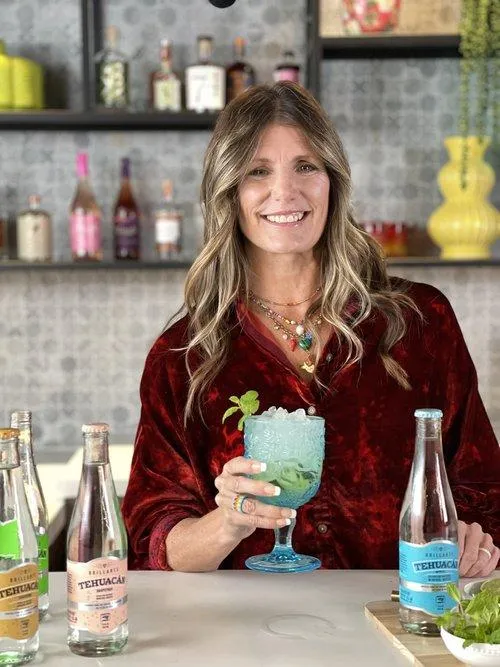
Written By Jenn Kautsch
I Thought I’d Be Further Along By Now
For every woman who’s had more Day Ones than she can count, maybe the answer isn’t starting over but how to keep going.
I have a question for you, Sis….
Have you ever looked at your relationship with alcohol and thought, I really thought I’d be further along by now? Maybe you thought you’d have this whole drinking thing figured out by this point. Maybe you started Dry January with the best intentions, did pretty well for a while, and then somewhere between a stressful Tuesday and somebody’s birthday dinner, you found yourself right back in the same old routine. Or maybe you made it through a beautiful alcohol-free stretch, felt amazing, slept better, had more energy, started feeling like yourself again, and then had a drink to celebrate your success! And suddenly all those good feelings were replaced by that familiar voice saying, Well, there you go. You blew it. Here we go again.
Oh, Sis. I know that voice. I know her very well. She and I spent a whole lot of time together during my drinking years, and let me tell you, she was not particularly encouraging company. She was the one who showed up the morning after I had promised myself I wouldn’t drink and reminded me of every little thing I’d done wrong. She was the one who told me I had no discipline, no follow-through, and apparently no ability to keep a promise to myself. And she was the one who convinced me that the only reasonable solution was to make another really big promise and start the whole thing over again. Preferably on a Monday, because apparently Monday has magical powers that Tuesday, Wednesday, and Thursday simply do not possess.
I had so many Day Ones during those years that I probably could have filled an entire calendar with them. Day One after vacation. Day One after a girls’ weekend. Day One after a holiday. Day One after a random Wednesday that somehow turned into more wine than I had planned. I was a very accomplished beginner. If there had been a loyalty program for starting over, I would have earned the free toaster, the matching luggage, and probably a weekend getaway by the time I finally figured out what was happening.
But here’s what I want to talk about today, because I think this might be one of the most important mindset shifts you can make on your sober-minded journey: What if you don’t actually need another Day One? What if you need to stop starting over and learn how to continue?
The Problem With Calling Everything a Failure
I know a lot of the women who find their way into Sober Sis are capable, responsible, get-it-done kinds of women. You have raised children, managed households, built careers, cared for aging parents, organized church events, kept appointments, remembered birthdays, and probably coordinated Thanksgiving dinner for 17 people while simultaneously locating somebody’s missing shoe. You know how to make a plan and execute it. You know how to show up for other people. And if someone gives you a deadline, by golly, you are going to meet it.
So it can feel particularly discouraging when you can’t seem to apply that same discipline to your relationship with alcohol. You can handle the budget, the schedule, the work project, the volunteer committee, and the entire family calendar, but somehow that little promise you made to yourself about not drinking on Tuesday keeps getting renegotiated around 4:30 in the afternoon. And because you’re used to being successful when you put your mind to something, you start treating every slip like evidence that something is wrong with you.
I did that for years. I thought I needed to try harder, get tougher, make better rules, or find some previously undiscovered reserve of willpower. But alcohol isn’t a household project you can finish by making a prettier checklist. It’s an addictive substance that has become deeply woven into our social lives, our routines, our celebrations, and sometimes even our identities. And trying to change that relationship requires more than being a woman who’s really good at getting things done.
It requires learning. And learning involves experience, including the experiences that don’t go exactly as planned.
Forgive the mistake. Remember the lesson.
I love that little reminder because it gives us permission to be human without giving us permission to stop growing. We can acknowledge that a choice didn’t line up with what we wanted without turning it into a character assessment. We can say, Well, that didn’t go the way I hoped, without following it up with, And therefore I am a complete disaster who will never get this right.
There’s a big difference between taking responsibility for a choice and using that choice as ammunition against yourself. One helps you move forward. The other tends to keep you stuck.
What If That Slip Was Actually Trying to Teach You Something?
When I was growing up, we played Chutes and Ladders. Do y’all remember that game? You’d be climbing along, making all this wonderful progress, feeling pretty good about yourself, and then suddenly you’d land on the wrong square and slide right back down. That is exactly how my drinking journey felt for years. I’d get some momentum, have a few good days or weeks, start feeling confident, and then something would happen. I’d drink more than I planned, feel terrible about it, and mentally send myself right back to the beginning.
But eventually I started realizing that I wasn’t actually back at the beginning. I had learned things. I had experienced alcohol-free days. I had discovered situations that were easier than I expected and situations that were harder. I had learned a little more about what made me want to drink and what made me feel good without drinking. All of that information was still mine, even if I had a night that didn’t go the way I wanted.
The breakthrough started happening when I became more curious instead of more demanding. Instead of waking up and immediately launching into my usual speech about how I needed to get my act together, I began asking different questions. What happened yesterday? What was I feeling? Was I tired? Was I lonely? Had I eaten enough? Was I anxious about something? Was I celebrating? Was I around people I always drank with? What was going on before I picked up the glass?
And most importantly, what could I do differently next time?
Starting over isn’t starting from scratch. You’re starting with information.
That is such a different way to look at a difficult moment. Instead of treating it like a verdict, you treat it like information. You become a student of your own life. And I believe God can use even the experiences we wish had gone differently to teach us something valuable. Nothing has to be wasted if we’re willing to learn from it.
Now, I’m not suggesting we intentionally make choices that hurt us just so we can collect more information. We have enough data points without volunteering for extra research, thank you very much. But when something does happen, we can choose whether we’re going to turn it into another shame spiral or use it to understand ourselves a little better.
And that brings me to something I wish I’d figured out much earlier.
The Wine Didn’t Start at 5:00
For years, I thought my problem happened at wine o’clock. I’d wake up in the morning feeling sluggish, foggy, and frustrated about how much I’d had to drink the night before. I’d tell myself, That’s it. I’m not drinking tonight. And I meant it! Morning Jenn was very convincing. Morning Jenn had plans. Morning Jenn was going to be a new woman by dinner.
I’d head off to my workout class around 9:30 or 10:00 because, let’s be clear, I have never been your 5:30 AM gym girl. Especially not when I was drinking the night before. I would get my workout in, maybe try to sweat out some of the previous evening’s decisions, and then have a beautiful healthy lunch. A salad. Maybe some fresh juice. Something organic, naturally, because apparently I was going to make up for last night’s wine by becoming the picture of wellness before noon.
And for a while, I felt pretty good about the whole thing. I was back on track. I was doing the things. I was absolutely not drinking that night.
Then 3:00 would roll around.
Oh, that 3:00 hour. By then I was tired. My blood sugar might be dropping. I’d been making decisions all day. The morning’s enthusiasm had worn off, and I started having those little conversations with myself that sounded innocent enough at first. Well, maybe I’ll just have one while I’m cooking. That’s not a big deal. People have wine with dinner all the time. I’ve been so good today. Surely I deserve a little something.
And from about 3:00 to 5:00, I would bargain and negotiate until I was so tired of thinking about whether I was going to drink that I’d finally decide to just pour the dadgum wine and be done with the conversation.
Except, of course, the conversation wasn’t done.
Once the bottle was open, there it sat in the refrigerator door, practically introducing itself every time I walked by. I’d have one glass while cooking, another while cleaning up, and before long I’d be doing what I now call my infamous bottle breakdown. I’d promised myself one, but now I’d had two. Well, shoot. Already broke the rule. Might as well have another. And if there’s only a little left, why leave that lonely bit in the bottle? Maybe I’d take the last glass out to the patio or into the bathtub, just trying to have my little moment of peace without anyone paying too much attention.
The next morning, there was Morning Jenn again, ready to start the whole thing over.
But here’s what finally occurred to me: The drinking didn’t really begin when I poured the wine. The pattern had started hours earlier.
The drink didn’t start when I poured it. It started when I began negotiating with myself.
That was huge for me. Because once I could see where the pattern actually began, I could start doing something about it before I was standing in the kitchen with an open bottle and a head full of justifications.
You’ve Got to Stop Judging the Behavior Long Enough to Study the Pattern
This is where I want you to put on your imaginary detective hat, Sis. Get yourself a magnifying glass. Channel a little Sherlock Holmes. We’re going to investigate, not interrogate.
When you have a drinking experience that doesn’t line up with your intentions, I want you to zoom out and look at the bigger picture. Instead of focusing only on the moment you had the drink, look at what happened before it. What time of day was it? Where were you? Who were you with? What had you eaten? How were you feeling? What were you telling yourself? Was there a familiar environment, person, emotion, or occasion that made drinking seem like the obvious thing to do?
Maybe you always start negotiating around 4:00. Maybe Friday afternoon feels like a reward you’ve earned. Date night has always meant wine, and you’re not quite sure what date night looks like without it. Maybe Mexican food automatically means margaritas. Perhaps you can go days without thinking about alcohol until your spouse pours a glass, and suddenly you want one too. Or maybe you don’t even know what you’re feeling because for so long you’ve simply reached for a drink whenever things became uncomfortable.
One of the women in our workshop asked a great question about that very thing. She wanted to know how to identify emotions when you’re not used to naming them. I suggested something I use and teach called a feelings wheel. Think about a color wheel. We know the basic colors like red, blue, yellow but there are about a hundred different shades of red. Cherry red, brick red, tomato red. You get the idea. Emotions are a lot like that. We know happy, sad, angry, and afraid, but underneath those broad categories are all kinds of more specific feelings. You might not just be angry; you might feel dismissed, overwhelmed, resentful, or disappointed. You might not just be sad; you might feel lonely, disconnected, or unappreciated.
And you can feel more than one thing at a time! I certainly have. You can be happy and sad, nervous and excited, grateful and exhausted. Sometimes the feeling isn’t one tidy little word that fits neatly into a box. Sometimes it’s a whole assortment of emotions having a committee meeting in your head, and nobody remembered to bring the agenda.
But when you begin naming what you’re feeling, you have a better chance of understanding what you actually need.
Stop judging the behavior long enough to study the pattern.
Because if you can see the pattern, you can begin preparing for it. You can eat something before that afternoon slump, make an evening plan before the negotiations begin or decide what you’re going to order at the restaurant before the waiter arrives. You can talk with your spouse about what you’re trying to do. And oh the power of connection, you can reach out to a friend when you’re lonely instead of asking wine to fill that space.
And sometimes the answer is as wonderfully unglamorous as eating a snack and going to bed early. I know. Groundbreaking stuff. LOL
Why Another Big Promise Probably Isn’t the Answer
Here’s the cycle I see so many women get caught in, and I lived in it myself for years. You drink more than you intended. Regret sets in. You make a big promise that you’re not going to do that again. You rely on willpower, grit your teeth, and try to power through. Then life happens. You have a stressful day, a wonderful day, a birthday dinner, a vacation, a Tuesday and suddenly you’re right back where you started.
So what do you do? You make another promise.
But if the same promise keeps meeting the same pattern, eventually you have to ask whether the answer is really a stronger promise.
You don’t need a stronger promise. You need a different pattern.
And a different pattern usually requires some actual structure. This is where I think a lot of us get tripped up because we confuse good intentions with a plan. I can wake up every morning sincerely intending not to drink, but if I haven’t thought about what I’m going to do at 5:00 when I’m tired, hungry, overstimulated, and standing in front of the refrigerator, then I’ve left a pretty important part of my day up to chance.
That’s why I teach women to pre-decide. Before you go to dinner, decide what you’re going to drink. Before the party, think about how you’re going to respond when someone offers you wine. Before Friday afternoon arrives, make a plan for what your evening is going to look like. Have something you enjoy drinking instead. Know what you’re going to do when the urge shows up. Practice playing the movie forward, looking beyond that first sip to how you want to feel later that night and the next morning. Learn to surf the urge rather than automatically acting on it.
You don’t need to have every answer figured out. You just need more than a vague hope that Evening You will somehow feel exactly the same way Morning You did.
And you need time to practice.
I think we underestimate that part. We want to learn something on Monday and have it mastered by Friday. We want to read the book, take the challenge, watch the workshop, and emerge as a completely transformed woman who never struggles with anything again. But changing a deeply practiced habit takes repetition. You have to actually live through the Friday nights, the restaurant dinners, the stressful afternoons, the holidays, and the ordinary Tuesdays while practicing something different.
That’s what makes the practice so valuable. You’re not just learning what to do. You’re learning how to live differently.
What Happens When the Wine Was Your Way of Coping?
One of our Sisters shared something during the workshop that I think so many women can relate to. She was about two weeks into her alcohol-free journey and described that achy stress that settles into your body. In the past, wine had been her way of making that feeling go away. But now she wasn’t drinking, and she was asking a very reasonable question: Okay, now what?
I love that question because it’s the question underneath so much of this work. If alcohol has been your answer to stress, anxiety, boredom, loneliness, physical discomfort, or emotional exhaustion, then taking alcohol out of the equation means you’re going to need some new answers. You can’t just remove your old coping tool and expect your needs to magically disappear. They’re still there. You’re still human. Life is still going to get lifey, as my friend Gina T. likes to say.
So what actually helps? Maybe it’s prayer. Maybe it’s getting outside and walking. What if it’s as simple as gentle stretching, journaling, reading a book, calling a friend, or making a lovely alcohol-free drink in a pretty glass. I am a big fan of a pretty glass, by the way. I still want my fun drinks and my beautiful glassware. I just don’t want the alcohol in them anymore. Maybe your answer is a warm bath, a quiet evening, or simply telling somebody, I’m having a hard time today and I could use a little encouragement.
The important thing is that we’re learning to distinguish between something that temporarily numbs us and something that actually restores us. Wine may have made me feel better for a little while, but it wasn’t restoring my energy, my sleep, my peace, or my presence. I was borrowing relief from the next day, and the next day was usually not particularly pleased about the arrangement.
Real self-care gives something back. It doesn’t simply turn down the volume for a little while and leave you with more to carry tomorrow.
And as you begin building those new ways of caring for yourself, you start discovering something really wonderful: you have more options than you thought you did.
Sometimes You Need to Borrow Somebody Else’s Strength
I want to talk about community for a minute because I don’t think we can have an honest conversation about changing our relationship with alcohol without talking about how lonely it can feel to do it by yourself.
For years, I tried to figure this out largely on my own. I had my rules, my promises, my good intentions, and my private disappointments. I was trying to solve the problem inside the same mind that had spent years negotiating with itself about wine. And when I struggled, I often pulled further inward because I didn’t want anybody to know how hard it was for me.
But here’s what I’ve learned: Sometimes you need to borrow the strength of another woman because you don’t have enough of your own that day.
And sometimes you’re the woman who gets to offer that strength to somebody else.
That’s one of my favorite things about the sisterhood we’ve built at Sober Sis. We have women who are just beginning to question their drinking, women taking their first 21-Day Reset, women learning to practice an alcohol-free lifestyle, and women who have been on this highway for years. We’re not all in the same place, but we understand one another in a way that is hard to explain to somebody who hasn’t lived it.
I call that type one understanding. It’s the difference between someone kindly saying, “Oh, that sounds difficult,” and another woman looking at you and saying, “Girl, I know EXACTLY what you’re talking about.” Both may be well-intentioned, but there is something powerful about being understood by somebody who’s been there.
Scripture reminds us that two are better than one because when one falls, the other can help her up. I love that picture of how we’re meant to travel through life. Not pretending we’re all so strong and capable that we never need help, but walking alongside one another, encouraging each other, and being willing to reach out a hand when somebody stumbles.
You don’t have to turn every hard day into a private battle. You don’t have to figure everything out before you belong. You don’t have to arrive perfectly polished and alcohol-free to be worthy of support.
You can come exactly where you are and start practicing.
You Are Not Back at the Beginning
One of our Sisters shared a wonderful analogy during the workshop about running a marathon. Imagine you’re running 26 miles, and somewhere along the way you trip and fall. Would you get up, turn around, run all the way back to the starting line, and begin the entire race again? Of course not! You’d brush yourself off, check your knees, figure out what happened, and keep moving toward the finish line.
Yet somehow that’s exactly what we do with our drinking journeys. We have a difficult moment, make a choice we wish we’d made differently, and immediately decide that everything we’ve learned up to that point has been erased.
But it hasn’t.
Those alcohol-free days still happened. The mornings you woke up feeling clear still happened. The dinner you navigated without drinking still happened. The uncomfortable feelings you learned to sit with still happened. The new friendships, the better sleep, the growing awareness, the confidence you started building and all of that is still part of your story.
You do not have to erase it because one chapter didn’t go exactly the way you planned.
Direction matters more than speed. And beginning again doesn’t mean going back to the beginning.
I spent years wanting to be further along than I was. I wanted to skip the messy middle, bypass the learning curve, and get straight to the part where I didn’t want alcohol anymore. But looking back, I can see that those years taught me things I needed to understand. They helped me recognize what wasn’t working and taught me the limitations of my rules and my willpower. Those experiences eventually helped me understand that I needed tools, practice, and connection rather than another stern lecture from myself.
And today, as I approach ten years alcohol-free, I don’t look back on those years as proof that I was incapable. I see them as part of the journey that brought me here.
Would I have loved to figure it out sooner? Well, sure. Wouldn’t we all love to go back and give our younger selves a few helpful pointers? I’d probably have a whole list, starting with drinking more water, getting more sleep, and maybe not taking every thought that popped into my head quite so seriously.
But I can’t go backward. And neither can you.
What we can do is take what we’ve learned and move forward with it.
Maybe You’re Further Along Than You Think
So if you’re reading this after another night that didn’t go the way you planned, I want you to resist the urge to turn it into a sweeping statement about who you are. You don’t need to decide that you’re hopeless, undisciplined, or incapable of change. And you certainly don’t need to wait until next Monday to do something different.
Instead, get curious. Look at the pattern. Ask what happened before the drink, what you were feeling, what you needed, and what you might do differently next time. Make a plan that goes beyond good intentions. Find a few women who understand what you’re working toward. Give yourself enough time and repetition to practice a new way of living.
And please, Sis, don’t confuse a slower journey with a failed one.
Maybe you thought you’d be further along by now because you imagined change would happen in a straight line. Or you thought once you understood the science, learned the tools, and made the commitment, you’d never have to revisit any of it. But real life has a way of reminding us that growth is not always neat and tidy. Sometimes we learn something, practice it, stumble, learn a little more, and practice again.
That doesn’t mean we’re going backward. It means we’re learning how to keep going.
And I wonder if the very thing you’re calling a setback might be the information that helps you make your next breakthrough. Maybe that difficult evening showed you that moderation isn’t working for you. Or it revealed that you’re consistently hungry and exhausted when the negotiations begin. Perhaps it helped you recognize how much you associate drinking with your spouse, your friendships, or your idea of relaxation. Maybe it showed you that you need more support than you’ve been giving yourself permission to ask for.
That’s not nothing. That’s valuable information about your life.
You don’t need another Monday. You don’t need another guilt trip. And you don’t need to make a bigger promise than the one you made last time. You need a different pattern, practical tools, and people who will help you keep practicing.
Because the goal was never to become the woman who could collect the most perfect alcohol-free days without ever having a difficult moment. The goal is to become a woman who knows what to do when life gets difficult. A woman who can recognize her patterns, care for her needs, make intentional choices, and keep moving in the direction she actually wants to go.
Maybe you aren’t where you thought you’d be by now. But you’re not where you used to be either. You’ve learned things. You’ve experienced things. You’ve gathered information that the woman you were a year ago might not have had.
So take all of that with you.
You don’t have to start over, Sis.
You get to begin again.
And this time, you’re bringing everything you’ve learned along for the ride.
Keep going and growing,
Jenn 💛
Ready to Change the Pattern?
If you’re tired of making the same promises about drinking and wondering why they never seem to stick, I want you to know there’s another way. Our Sober Sis 21-Day Reset is a grace-filled place to start understanding your relationship with alcohol, recognizing your triggers, and learning practical tools for a more sober-minded life. No labels, no shame, and no pressure to decide forever. Just 21 days to get curious, find support, and begin making choices that feel more aligned with the woman you want to be.


Written By Jenn Kautsch
Your sober minded sis!
TIRED of the DETOX to RETOX loop?
Break free with the 21 Day Reset Challenge.
Sign up now to get BONUS coaching before we start!
Need support TONIGHT at WINE O’CLOCK?

Get my FREE “Survive the 5” guide by CLICKING HERE.
Sober Sis Swag!



COMPANY
LEGAL
FIND US ON SOCIALS


